


By: Olusegun Ogunkayode[RovroundNews]
In every society, emotion is natural. Human beings react with passion to hunger, injustice, fear, inequality, betrayal, violence, and political manipulation. Anger can inspire resistance against oppression. Sympathy can unite communities in times of tragedy. Patriotism can motivate citizens to defend their nation. But when emotional arguments become the primary framework through which societies address political, economic, security, and social welfare issues, reason gradually loses its place at the table of national discourse.
Across many developing democracies, especially Nigeria, emotional sentiment has increasingly replaced critical thinking, objective evaluation, and institutional accountability. Public debates are no longer driven by facts, policies, competence, or long-term national interests. Instead, they are often shaped by ethnic loyalty, religious sentiment, regional attachment, political hero worship, propaganda, and emotional outrage. The consequences are enormous: weakened national cohesion, distorted governance, rising insecurity, economic instability, and a society perpetually divided against itself.
Nigeria today presents one of the clearest examples of a nation where emotional arguments frequently overshadow rational engagement. In political conversations, economic discussions, insecurity debates, and social welfare policies, citizens often respond first with emotion and identity before considering facts. This pattern has become a major affront to peaceful co-existence and national unity.
The tragedy is not that Nigerians are emotional people. Every nation has emotional citizens. The tragedy lies in the inability of institutions, leaders, and even the public sphere to balance emotion with reason. Where sentiment dominates logic, national progress becomes difficult.
Politics of Emotion Over Competence: Politics in Nigeria has largely evolved into an emotional battlefield rather than a contest of ideas. Elections are rarely won solely on policy proposals or governance records. Instead, politicians strategically exploit tribal identities, religious affiliations, historical grievances, and emotional manipulation to secure loyalty.
A candidate may be defended not because of proven competence but because “he is our son or our turn.” Another may receive blind support because “our religion must retain power.” In such circumstances, accountability dies quietly. Citizens become emotionally invested in personalities rather than principles.
The consequences are visible across decades of governance failures. Many Nigerians passionately defend politicians even when public institutions collapse around them. Roads remain abandoned, schools deteriorate, hospitals lack equipment, unemployment rises, yet supporters continue to justify incompetence because emotional attachment outweighs objective assessment.
Political conversations often degenerate into hostility. Citizens who criticize leaders are branded enemies of a tribe, religion, or region rather than participants in democratic accountability. Rational discourse disappears under the weight of emotional polarization.
This culture weakens democracy itself. Democracy survives not merely through elections but through informed citizens capable of separating sentiment from governance performance. When voters consistently prioritize emotion over competence, political leaders learn that they can manipulate identity instead of delivering results.
The danger extends beyond elections. Governance becomes transactional and divisive. Public appointments are judged through ethnic or regional lenses. Merit suffers. National institutions become arenas of suspicion where every action is interpreted as favoritism or marginalization. In such an atmosphere, unity becomes fragile.
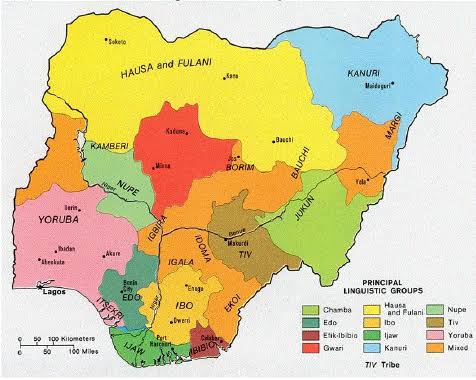
The Historical Burden of Division: Nigeria’s emotional politics cannot be separated from its historical evolution. The 1914 amalgamation brought together diverse ethnic nationalities with different cultures, religions, political systems, and economic structures. Colonial administration deepened divisions through uneven educational opportunities, regional administrative policies, and indirect rule systems that created long-lasting disparities.
Following independence, rather than intentionally building a unified national identity, political elites often weaponized existing divisions for political advantage. The First Republic collapsed partly under regional tensions. The civil war further deepened distrust among ethnic groups. Military regimes centralized power but failed to heal emotional fractures.
Decades later, the scars remain visible. National issues are still interpreted through ethnic and regional emotions. Economic appointments become controversial because people perceive them as sectional domination. Security crises are analyzed not only through facts but through emotional narratives of victimhood and bias.
Instead of confronting structural problems collectively, Nigerians frequently retreat into identity camps. The emotional memory of historical grievances continues to influence present-day politics. Yet no nation can progress sustainably when its citizens view one another primarily through the lens of suspicion.
Economic Debates Driven by Sentiment: The economy suffers greatly when emotional reasoning overrides objective analysis. Economic reforms require difficult conversations, data-driven planning, patience, and institutional discipline. However, public discourse often becomes emotionally charged without room for nuanced understanding.
Citizens understandably react emotionally to inflation, fuel price increases, unemployment, and rising poverty. Hunger itself produces emotional frustration. But beyond public reactions, political actors often exploit economic pain to spread propaganda rather than constructive solutions.
Policies are either praised or condemned based on political loyalty instead of measurable outcomes. Supporters defend harmful economic decisions because “our party is in power,” while opponents reject beneficial reforms simply because they originate from rival political camps. This polarization makes honest national dialogue difficult.
Nigeria’s dependence on oil revenue, weak industrialization, unstable currency, high import dependence, and youth unemployment require serious economic restructuring. But meaningful reforms often become trapped within emotional political narratives.
For instance, subsidy removal debates frequently generate more emotional confrontation than informed economic discussion. One side frames critics as enemies of progress, while another portrays supporters as enemies of the poor. Lost in the noise are deeper questions about transparency, institutional efficiency, social protection systems, and long-term diversification strategies.
Economic policy cannot succeed in an atmosphere dominated entirely by emotional outrage and political propaganda. Successful economies are built through discipline, productivity, education, innovation, and institutional consistency — not emotional slogans.
Insecurity and the Politics of Sentiment: Perhaps nowhere is emotional polarization more dangerous than in the discussion of insecurity. Nigeria continues to battle terrorism, banditry, kidnapping, communal clashes, separatist tensions, and violent criminality. Yet public responses to insecurity often reflect emotional and sectional interpretations rather than collective national concern.
Victims of violence sometimes receive sympathy only when they belong to certain ethnic, religious, or regional groups. Communities selectively amplify tragedies that fit existing emotional narratives while downplaying others. Social media further intensifies this problem by spreading unverified information, inflammatory rhetoric, and divisive propaganda.
Instead of unified outrage against violence itself, insecurity debates often descend into accusations and counter-accusations among ethnic or political camps. This weakens national solidarity.
Terrorism and criminality thrive where societies are divided. Criminal networks exploit distrust between communities. Citizens become reluctant to cooperate with security agencies if they perceive those institutions through emotional or ethnic suspicion. Rumors spread faster than verified intelligence. Public confidence in national security deteriorates.
The emotional politicization of insecurity also affects policy responses. Governments sometimes hesitate to take decisive actions for fear of triggering regional or political backlash. Security strategies become vulnerable to political calculations instead of objective assessment. A nation cannot effectively confront insecurity when citizens are emotionally fragmented.
Social Media As Amplifier of Emotonal Conflict: The rise of digital communication has dramatically intensified emotional discourse in Nigeria and across the world. Social media platforms reward outrage, sensationalism, and emotional reactions. Calm analysis rarely trends. Anger spreads faster than reason.
In Nigeria’s online environment, political supporters aggressively attack dissenting opinions. False narratives circulate rapidly because they appeal to emotional instincts. Tribal insults, religious intolerance, conspiracy theories, and misinformation dominate conversations.
Young people are particularly affected because social media increasingly shapes political awareness. Instead of developing critical thinking skills, many users become trapped in echo chambers where emotional narratives are continuously reinforced.
Algorithms favour controversy because controversy generates engagement. As a result, moderate voices are drowned out by extreme opinions. This digital culture affects real-world relationships. Friendships break over politics. Communities become polarized. National conversations become toxic.
Social media itself is not the enemy. The problem lies in the absence of media literacy, emotional discipline, and responsible digital citizenship. Without these safeguards, technology becomes a weapon against social cohesion.
Religion and Emotional Manipulation: Religion remains one of the most sensitive emotional forces in Nigerian society. Faith can inspire compassion, morality, discipline, and communal support. Religious institutions often provide social welfare where governments fail. However, religion also becomes dangerous when manipulated for political or emotional purposes.
Political actors frequently exploit religious sentiment to mobilize support or discredit opponents. Citizens sometimes interpret criticism of leaders as attacks on religion itself. Religious identity becomes entangled with political loyalty. This creates dangerous divisions.
Instead of focusing on governance quality, citizens become emotionally defensive about religious representation in power structures. National conversations shift from competence to sectarian balancing.
Religious intolerance further deepens insecurity. Extremist ideologies flourish where emotional narratives of superiority or persecution dominate public consciousness.
Nigeria’s diversity should be a source of cultural richness, not perpetual suspicion. But that requires leaders and citizens willing to prioritize shared humanity over emotional manipulation.
The Cost to National Cohesion: National cohesion depends on shared trust, collective identity, and mutual respect. Emotional polarization weakens all three. When citizens constantly view one another through ethnic, religious, political, or regional emotions, national unity becomes superficial. Every national issue becomes interpreted as “us versus them.”
This mentality affects federal character debates, resource allocation, electoral outcomes, security operations, and even sporting events. Citizens stop seeing themselves primarily as Nigerians and instead retreat into narrower identities.
The danger is profound because no nation can develop sustainably without internal cohesion. Economic growth requires stability. Foreign investment depends on predictability. National security depends on cooperation. Democratic progress depends on trust in institutions. Where emotional hostility dominates public life, development slows. Nations collapse not only through external invasion but through internal fragmentation.
Leadership Failure and Emotional Governance: Political leadership bears significant responsibility for Nigeria’s emotional divisions. Rather than calming tensions, many leaders deliberately inflame them for political advantage.
Campaign rhetoric often relies on fear and emotional manipulation. Politicians exploit poverty and illiteracy to spread simplistic narratives that divide citizens. Instead of encouraging national consciousness, they strengthen sectional loyalties.
Even after elections, governance frequently reflects political favoritism. Opponents are treated as enemies rather than citizens with legitimate concerns. Public communication becomes confrontational instead of unifying.
Leadership requires emotional intelligence, restraint, and vision. Great leaders unite diverse populations around common goals. They inspire confidence beyond ethnic or religious boundaries. Unfortunately, many political actors benefit from division because divided populations are easier to manipulate. As long as emotional politics remains profitable, national cohesion will remain fragile.
Education and the Crisis of Critical Thinking: One major reason emotional arguments dominate public discourse is the weakness of critical thinking education. Many educational systems focus heavily on memorization rather than analytical reasoning.
Citizens are rarely taught how to evaluate evidence objectively, question propaganda, distinguish fact from opinion, or engage respectfully with opposing viewpoints. As a result, emotional reactions become the default response to complex national issues.
A population without critical thinking skills becomes vulnerable to manipulation by politicians, religious extremists, propagandists, and social media influencers. Education must go beyond certificates. It should develop intellectual discipline, civic responsibility, and emotional maturity.
Schools should encourage debate, research, civic studies, media literacy, and problem-solving engagements. Citizens must learn that disagreement is not betrayal and criticism is not hatred. Without critical thinking, democracy becomes vulnerable to emotional chaos.
Youth Frustration and Emotional Radicalization: Nigeria’s youth population represents both hope and danger. Millions of young Nigerians face unemployment, poor education, insecurity, and limited opportunities. Frustration naturally creates emotional vulnerability.
When young people lose faith in institutions, they become more susceptible to radical narratives, whether political, ethnic, religious, or criminal. Some are recruited into violent movements. Others embrace online extremism or toxic political propaganda. Emotional anger replaces constructive civic engagement.
The #EndSARS protests demonstrated both the power and complexity of youth emotion. Genuine grievances about police brutality united young Nigerians across ethnic and religious lines. But the aftermath also revealed how quickly emotional tension can escalate in an atmosphere of distrust and misinformation. Youth energy is essential for national transformation. But without economic opportunities, civic education, and inclusive governance, emotional frustration can become destabilizing.
The Role of Media in Shaping Public Emotion: Traditional media also plays a powerful role in emotional narratives. Sensational headlines, partisan reporting, and inflammatory commentary often intensify public tension.
Media organizations face pressure from political interests, commercial competition, and audience expectations. Emotional stories attract attention more easily than balanced analysis. Yet journalism carries enormous responsibility in fragile democracies.
Responsible media should promote fact-checking, balanced reporting, and informed debate. Journalists must resist becoming instruments of propaganda or ethnic division. The media can either strengthen national cohesion or deepen fragmentation.
Building a Culture of Rational Engagement: Nigeria cannot eliminate emotion from public life, nor should it attempt to. Emotion is part of human nature. Compassion, patriotism, outrage against injustice, and empathy are essential moral forces. The challenge is balance.
A healthy society combines emotional awareness with rational analysis. Citizens should care deeply about injustice while still demanding evidence, accountability, and thoughtful policy solutions. To achieve this balance, several changes are necessary.
First, leadership must change its communication strategies. Leaders should avoid inflammatory rhetoric and prioritize national unity above sectional politics.
Second, educational reforms must emphasize critical thinking and civic responsibility.
Third, media organizations should strengthen ethical journalism and combat misinformation.
Fourth, religious and traditional leaders should promote tolerance and shared humanity rather than emotional division.
Fifth, citizens themselves must cultivate emotional discipline. Democracy requires patience, listening, and the ability to disagree without hatred.
National conversations should focus more on policies than personalities, more on competence than identity, and more on solutions than emotional outrage.
Lessons from Other Nations: Many countries have struggled with emotional polarization. The United States faces deep political division. Rwanda experienced devastating ethnic violence before rebuilding national identity. South Africa continues to confront racial and economic tensions after apartheid. These examples show that national healing is possible but requires intentional effort.
Countries that overcome division usually invest heavily in inclusive institutions, national orientation, civic education, and economic opportunity. They create systems where citizens feel represented regardless of identity. Nigeria can learn from these experiences. Its diversity is not inherently a curse. Diversity becomes dangerous only when manipulated by selfish interests and emotional propaganda.
Toward a Shared National Future: Nigeria stands at a crossroads. The country possesses enormous human and natural resources, vibrant cultures, resilient citizens, and youthful energy. Yet these strengths are continually undermined by emotional fragmentation. If citizens continue to prioritize sentiment over substance, political loyalty over accountability, and identity over competence, national progress will remain slow and unstable.
But there is another path. A more united Nigeria is possible when citizens begin to see themselves first as partners in a shared national project rather than permanent adversaries. This requires maturity, sacrifice, and institutional reform. National cohesion cannot be built through emotional manipulation. It must be built through justice, fairness, competence, inclusion, and responsible leadership.
The future of Nigeria depends not on the absence of emotion but on the ability to prevent emotion from destroying reason. A nation survives when its people can disagree without hatred, criticize without division, and pursue collective progress above sectional sentiment. Until that balance is achieved, emotional arguments will continue to function not as tools of unity but as barriers to peaceful coexistence and sustainable development. And perhaps that remains one of the greatest challenges confronting Nigeria today.