


By: Olusegun Ogunkayode[RovroundNews]
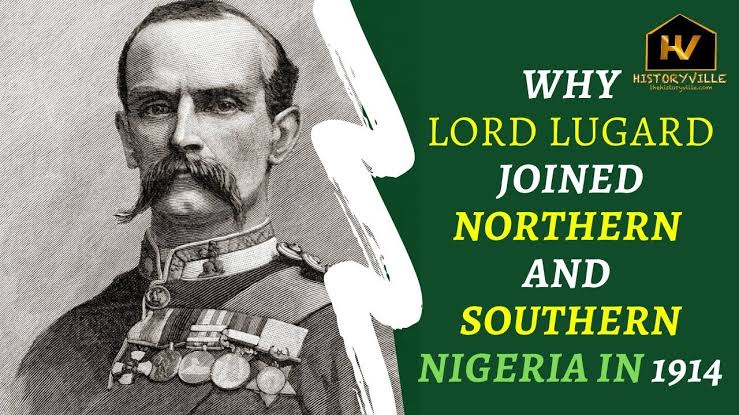
When British colonial administrator Frederick Lugard signed the 1914 amalgamation that merged the Northern and Southern Protectorates into one entity called Nigeria, the exercise was celebrated by the colonial authorities as a masterstroke of administrative convenience. But more than a century later, many Nigerians now see the union as a troubled and unequal marriage whose unresolved contradictions have continued to fuel insecurity, poverty, corruption, ethnic distrust, educational imbalance, and diplomatic fragility.
To many critics, Nigeria today resembles a deeply divided household where the partners remain suspicious of one another, struggling under the weight of unequal development, religious differences, political domination, and mutual accusations of marginalization.
The amalgamation, they argue, did not unite a people with a common vision. Rather, it forcefully welded together societies with different histories, cultures, educational exposure, and political systems without first building a framework for equity and integration.
The consequences of that hurried union are still visible across nearly every sector of Nigerian life. The Educational Divide. Perhaps nowhere is the disparity more glaring than in education. Historically, Southern Nigeria embraced Western education earlier due to missionary activities and coastal trade. Schools flourished rapidly in regions such as Lagos, Ibadan, Calabar, and Onitsha. The North, under indirect colonial rule, advanced more cautiously toward Western education because of fears that missionary influence could weaken Islamic traditions and traditional authority.
More than a century later, the imbalance remains profound. Many Northern states continue to record some of the highest numbers of out-of-school children in the world. Several states in the South dominate university admissions, literacy rankings, and private-sector professional opportunities. In competitive federal examinations, debates frequently emerge over educational cut-off marks, with critics arguing that unequal standards institutionalize regional imbalance rather than solving it. The result is a widening social gap that contributes to unemployment, poverty, street begging, child labor, and youth radicalization.
Experts have repeatedly warned that educational inequality remains one of the strongest drivers of insecurity and anti-social behavior in the country. Poverty Amid Plenty
Economically, Nigeria presents another painful contradiction. Southern Nigeria, particularly the Niger Delta, produces the oil wealth that sustains the national economy. Yet many communities in the region continue to battle environmental pollution, unemployment, and underdevelopment despite decades of crude oil exploration.
At the same time, Northern Nigeria possesses vast agricultural potential and large human resources but suffers from chronic poverty, poor infrastructure, desertification, and insecurity. Instead of complementing each other as equal partners, both regions often accuse one another of exploitation and political manipulation.
In the South, many believe federal power structures disproportionately favor Northern political interests. In the North, many view Southern elites as controlling commerce, banking, and economic opportunities while failing to appreciate Northern contributions to national unity and food production.
This atmosphere of distrust has weakened national cohesion and deepened regional resentment. Insecurity and the Collapse of Social Order. Nigeria’s security crisis further exposes the fragile foundation of the amalgamation. The North has suffered devastating waves of terrorism, banditry, mass abductions, and insurgency. The extremist group Boko Haram turned parts of the Northeast into conflict zones, destroying schools, villages, and economic activities. Banditry across states such as Zamfara, Kaduna, Katsina, and Sokoto has displaced thousands of citizens and crippled farming communities.
Meanwhile, the South has faced militancy, cult violence, kidnapping, separatist agitations, cybercrime, ritual killings, and armed robbery. In the Southeast, agitation linked to Indigenous People of Biafra reflects continuing feelings of exclusion and historical injustice dating back to the Nigerian Civil War.
The Southwest has witnessed rising concerns over kidnapping and organized crime, prompting the creation of regional security outfits such as Amotekun Corps. Rather than fostering national solidarity, insecurity has intensified ethnic profiling and regional blame games. Criminality is increasingly interpreted through ethnic and religious lenses, worsening distrust among citizens.
Corruption and Political Manipulation. Nigeria’s political structure has also been accused of rewarding ethnic loyalty over competence. Since independence, political power has frequently rotated amid tensions between North and South, Christians and Muslims, and major ethnic blocs. Elections are often dominated not by ideology or policy debates, but by regional calculations and identity politics.
Critics argue that corruption thrives because public office is frequently treated as an ethnic entitlement rather than a platform for national service. This has contributed to weak institutions, poor governance, decaying infrastructure, unemployment, and widespread public frustration. From electoral violence to embezzlement scandals, the country’s political instability continues to undermine public trust.
The internal contradictions of Nigeria have also affected its international standing. Despite being Africa’s most populous nation and one of its largest economies, Nigeria continues to battle damaging global perceptions linked to corruption, terrorism, cybercrime, human trafficking, piracy, and political instability.
Foreign investors often express concerns about insecurity, inconsistent policies, and governance challenges. International organizations regularly raise alarms about poverty, human rights abuses, electoral tensions, and humanitarian crises.
The educational and technological gap between regions also affects Nigeria’s competitiveness in the global economy. While some Southern cities increasingly embrace digital innovation and international business partnerships, many Northern rural communities still struggle with basic literacy, healthcare access, and infrastructure. These disparities complicate Nigeria’s foreign diplomacy because national development appears uneven and fragmented.
Despite these challenges, Nigeria remains a strategic force in Africa. The country has contributed significantly to peacekeeping operations, regional diplomacy, entertainment, literature, sports, and entrepreneurship. Nigerian music, movies, fashion, and technology continue to shape global African culture. Cities like Lagos have emerged as major commercial and creative hubs attracting international attention.
More than 100 years after amalgamation, the central question remains unresolved: can Nigeria truly become a united nation without addressing the structural inequalities embedded within its foundation? Many Nigerians believe the answer lies in genuine federalism, educational reform, economic decentralization, justice, and equal opportunities for all regions, while others argue that unless the country confronts the historical imbalance between North and South, the union may continue to produce tension rather than transformation.
Still, amid the crises, millions of Nigerians continue to live, work, trade, marry, worship, and dream together across ethnic and religious lines. Ordinary citizens often demonstrate more unity than the political class.
That enduring resilience may yet become the country’s greatest hope. For now, however, the shadow of 1914 still hangs heavily over the Nigerian story, a reminder that a forced marriage without fairness, trust, and mutual understanding can leave generations struggling to define whether they are truly one nation or merely partners trapped in a complicated union.