

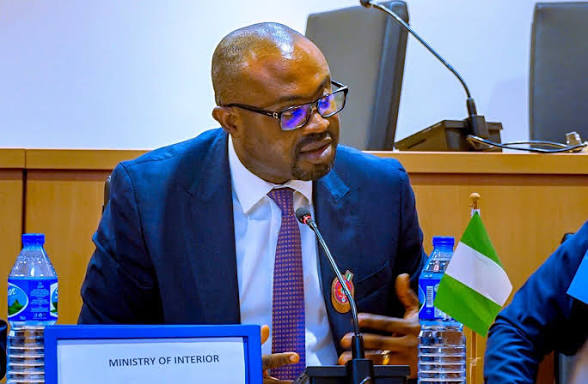

As Nigeria push to overhaul its correctional system gathered momentum on Tuesday, 25th March,2026, the Minister of Interior, Olubunmi Tunji-Ojo, declared open a high-level stakeholders’ engagement, aimed at validating the report of an independent investigative panel probing alleged corruption and rights violations within the Nigerian Correctional Service.
The event, held at the Transcorp Hilton Abuja, brought together top government officials, including the Attorney General of the Federation and Minister of Justice, Prince Lateef Olasunkanmi Fagbemi, alongside other key stakeholders in the justice sector.
Speaking at the opening session, Tunji-Ojo described the engagement as a defining moment in the Federal Government’s efforts to restore public confidence in the nation’s correctional system, stressing that it marked the culmination of a 16-month investigative process.
The Minister recalled that the panel was inaugurated on November 24, 2024, in response to widespread public allegations that had cast a shadow over the integrity of correctional institutions across the country.
“This is not just another meeting. It represents our unwavering commitment to transparency, accountability, and genuine reform,” he said. “Without acknowledging the problem, there can be no solution.”
Tunji-Ojo commended the panel, chaired by the Permanent Secretary of the Ministry of Interior, Magdalene Ajani, for what he described as its diligence, professionalism, and resilience throughout the investigation.
According to him, the panel’s findings revealed “serious systemic challenges,” including corruption, operational inefficiencies, poor inmate conditions, and significant human rights concerns within the correctional system.
He emphasized that the administration of President Bola Ahmed Tinubu maintains a zero-tolerance stance on corruption, abuse of power, and violations of human rights, particularly within institutions tasked with upholding justice.
“Our correctional centres must serve as places of reformation, rehabilitation, and reintegration—not suffering or abuse,” the Minister said, adding that all inmates, regardless of their offences, retain their fundamental human dignity.
Beyond punitive measures, Tunji-Ojo highlighted the need for a holistic reform strategy, including improved welfare and training for correctional officers, enhanced operational standards, and the adoption of non-custodial measures to address overcrowding.
He also disclosed that the Federal Government has made notable progress in improving inmate feeding allowances, following recent approvals by President Tinubu.
Describing the engagement as a platform for “honest dialogue and actionable collaboration,” the Minister urged stakeholders to take collective responsibility in rebuilding a correctional system that delivers justice while restoring hope.
The stakeholders’ meeting is expected to produce validated recommendations that will guide policy decisions and reforms aimed at transforming Nigeria’s correctional institutions into centres of dignity and rehabilitation.