

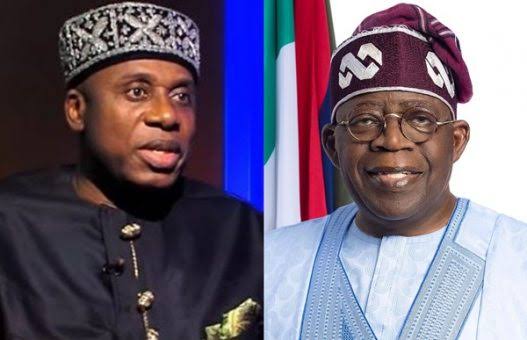

The former Minister of Transportation and ex-Rivers State Governor, Rotimi Amaechi, on Wednesday, 25th February,2026 delivered a blunt assessment of Nigeria’s political climate, declaring that the opposition, not President Bola Ahmed Tinubu, bears the greatest responsibility for the country’s current democratic challenges.
Amaechi made the remarks at a joint press conference in Abuja attended by prominent opposition figures, including former Vice President Atiku Abubakar, former Labour Party presidential candidate Peter Obi, and former Senate President David Mark, among others.
Addressing the journalists, Amaechi argued that President Tinubu’s political maneuvers thrive largely because of what he described as a fragmented and ineffective opposition.
“Tinubu is not our problem. The problem is the opposition,” Amaechi said. “We need to separate ourselves from the government in power. If we remain weak and divided, we cannot hold anyone accountable.”
The former minister suggested that the ruling party’s strength is amplified by the inability of opposition parties to present a united and strategic front. According to him, political resistance must go beyond rhetoric and translate into structured collaboration capable of challenging executive actions and policies.
Amaechi further criticized what he described as a pattern in governance where incremental political steps are taken without firm resistance, gradually weakening dissenting voices.
The joint press conference was convened to express concerns over recent political developments and to push for greater unity among opposition parties ahead of future electoral contests. Speakers at the event emphasized the need to safeguard democratic institutions and ensure credible elections.
Political observers say Amaechi’s remarks signal a possible realignment within opposition ranks, as key figures appear to be exploring coordinated strategies to counter the ruling party’s dominance.
While the presidency has yet to respond directly to the comments, analysts believe the statement underscores growing momentum toward coalition-building among opposition stakeholders.
The event marks one of the most visible gatherings of opposition leaders in recent months, raising questions about the shape of Nigeria’s political landscape as the country moves closer to another electoral cycle.