

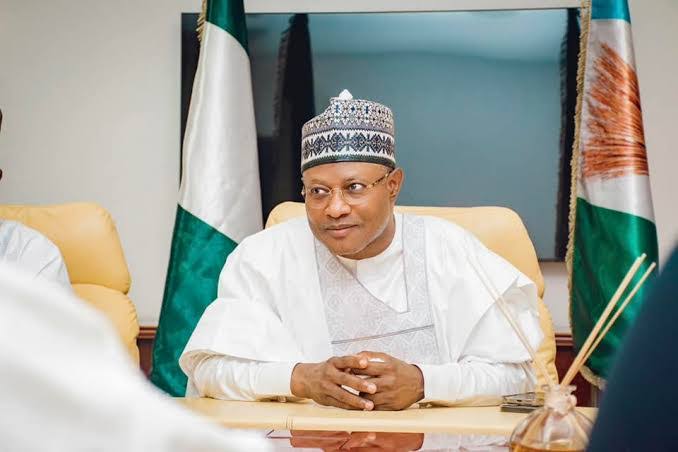

Birthdays offer more than the marking of years; they provide moments for reflection, on purpose, on service, and on the quiet impact of a life lived in commitment to others. As His Excellency, Senator Uba Sani, CON, the Governor of Kaduna State, marks another year, the occasion invites not only celebration but thoughtful tribute to a leader whose journey mirrors resilience, conscience, and a deep belief in the unity of humanity.
Governor Uba Sani’s life story is not one of sudden political fortune, but of gradual formation, shaped by learning, activism, faith, sacrifice, and a lifelong devotion to justice and inclusion. In a state as diverse and symbolically significant as Kaduna, his leadership stands as a reminder that governance can be firm yet compassionate, principled yet inclusive.
Uba Sani was born on December 31, 1970, in Zaria, a city renowned for its rich intellectual tradition, cultural diversity, and religious coexistence. Zaria’s unique blend of history, scholarship, and pluralism played a formative role in shaping his worldview. Growing up in this environment exposed him early to the realities of diversity of faiths, ethnicities, and ideas, instilling in him a natural respect for difference and dialogue.
From childhood, he displayed an unusual sense of responsibility and moral awareness. Friends and contemporaries often recall a young Uba Sani who listened more than he spoke, who mediated disagreements rather than inflamed them, and who possessed an instinctive sense of fairness. These early traits would later define his approach to leadership.
Governor Uba Sani’s educational journey reflects a deliberate commitment to self-development and public service.
He began his primary education at a Local Education Authority (LEA) Primary School in Zaria, where he received foundational instruction in literacy, numeracy, and civic values. His secondary education was completed at Government Secondary School, Zaria, an institution known for academic discipline and the nurturing of public-spirited citizens.
Driven by a passion for problem-solving and innovation, he proceeded to Kaduna Polytechnic, earning a Higher National Diploma (HND) in Mechanical Engineering. This technical training sharpened his analytical skills and cultivated a structured approach to challenges, an attribute evident in his later administrative career.
Understanding that leadership also requires economic and managerial competence, he pursued a Postgraduate Diploma in Business Administration (PGD) at the University of Abuja, followed by a Master of Science (MSc) in Finance from the University of Calabar. These qualifications equipped him with a deep understanding of financial systems, governance economics, and institutional management, tools that have proven invaluable in public office.
Before elective politics, Uba Sani’s public life was defined by activism and advocacy. He emerged as a prominent figure during Nigeria’s pro-democracy struggle, aligning himself with civil society movements that resisted authoritarian rule and demanded accountability.
He served in leadership roles within the Campaign for Democracy (CD) and the Joint Action Committee of Nigeria (JACON), organisations that stood at the forefront of Nigeria’s democratic resistance. During this period, he experienced arrests and intimidation, sacrifices that strengthened his resolve and shaped his enduring belief that power must always be exercised with restraint and responsibility.
Reflecting on that era, Governor Uba Sani has often noted that activism taught him patience, humility, and the value of dialogue, lessons that continue to inform his leadership today.
With the return of democratic governance in 1999, Uba Sani transitioned into formal public service. He served as Special Adviser on Public Affairs to President Olusegun Obasanjo, contributing to national discourse and policy communication during a critical phase of democratic consolidation.
His career later expanded into advisory roles within the Federal Capital Territory Administration, where he gained practical experience in governance, public sector reform, and intergovernmental relations.
In 2019, he was elected to the Nigerian Senate, representing Kaduna Central Senatorial District. As a senator, he distinguished himself through diligence, policy depth, and legislative productivity. His appointment as Chairman of the Senate Committee on Banking, Insurance, and Other Financial Institutions placed him at the centre of Nigeria’s financial oversight architecture.
His legislative record, marked by bill sponsorship, effective oversight, and bipartisan engagement, earned him respect across party lines and recognition as one of the most effective lawmakers of his time.
Governor Uba Sani is a man of faith, deeply grounded in his religious convictions. However, his faith has never been a tool for exclusion; rather, it has shaped his values of compassion, justice, and respect for human dignity.
In Kaduna State, a place where religion has sometimes been exploited as a fault line, his approach has been markedly different. He consistently affirms that faith should unite rather than divide, and that governance must remain neutral, fair, and inclusive.
He maintains close engagement with Muslim and Christian leaders, attends major religious events across faiths, and encourages continuous interfaith dialogue. His message is consistent: Kaduna belongs equally to all its people, regardless of belief.
This posture has earned him trust and goodwill across religious communities, reinforcing social cohesion and reducing tension in a historically sensitive environment.
On May 29, 2023, Uba Sani was sworn in as Governor of Kaduna State, assuming leadership of one of Nigeria’s most diverse and complex states. From his first day in office, he emphasised reconciliation, consultation, and inclusive governance.
As governor, his administration has prioritised social infrastructure, recognising that development must be people-centred. His focus areas include:- Education reform and access, Primary healthcare revitalisation, Social welfare and poverty alleviation, Youth and women empowerment, Security through community engagement
His leadership style is consultative rather than confrontational. He regularly engages traditional rulers, religious leaders, civil society groups, and community stakeholders, ensuring that governance decisions reflect collective input.
One of the defining hallmarks of Governor Uba Sani’s administration is his intentional alignment across religious and ethnic divides. Appointments and policies are guided by competence and equity, not creed. His inclusive approach has helped rebuild trust in government and foster a sense of shared ownership of the state’s future.
By promoting dialogue over division, and fairness over favoritism, he has positioned Kaduna on a steadier path toward peace and sustainable development.
As Governor Uba Sani celebrates his birthday today, his story remains one of service in progress. He is a leader shaped by struggle, refined by learning, and guided by conscience. His life underscores the truth that leadership is not about dominance, but about responsibility; not about division, but about unity.
On this special day, the people of Kaduna State, ROVROUND COMMUNICATIONS LIMITED and admirers beyond celebrate not just the passing of another year, but the continuing journey of a leader committed to peace, progress, and inclusive governance.
Happy Birthday, Your Excellency. May your years ahead be marked by strength, wisdom, and enduring service to humanity.