


By [Olusegun Ogunkayode]
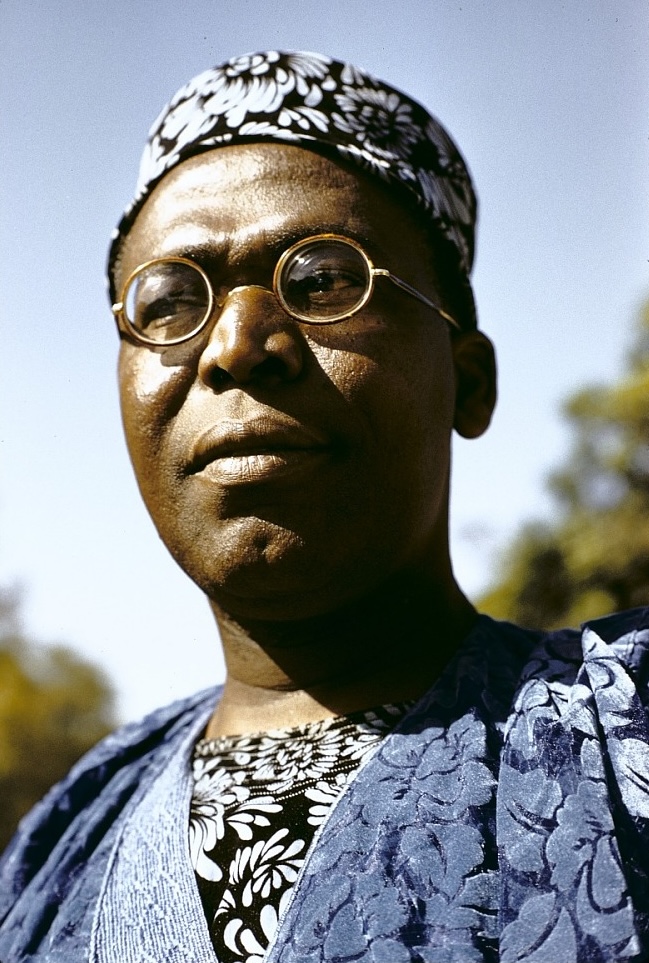
In the story of Nigeria’s political evolution, few names resonate with the clarity, conviction, and enduring influence of Obafemi Awolowo. Revered as “The Sage,” Awolowo was more than a politician; he was a visionary nation-builder, philosopher of governance, and a relentless advocate of social justice whose ideas continue to shape Nigeria decades after his passing.
Born on March 6, 1909, in Ikenne, Awolowo’s journey from humble beginnings to becoming one of Africa’s most influential political thinkers is a testament to discipline, intellectual rigor, and unwavering dedication to public service.
Awolowo’s childhood was marked by hardship after the death of his father, yet adversity became the crucible that forged his determination. Through self-discipline and a passion for learning, he pursued education relentlessly.
He eventually studied law in the United Kingdom and was called to the bar at the Inner Temple in 1946. During this period, his political philosophy matured, grounded in democratic socialism, federalism, and the belief that education was the most powerful instrument for national development.
Awolowo played a defining role in the cultural and political awakening of the Yoruba people through the establishment of the influential socio-cultural organisation Egbe Omo Oduduwa in 1948.
The organisation promoted unity, cultural pride, and political organisation among the Yoruba. It later became the political backbone for the formation of the powerful political party, the Action Group in 1951.
Through the Action Group, Awolowo articulated a progressive political ideology focused on: Free and universal education, Free healthcare, Rural development, Economic modernization and True federalism. These ideas were revolutionary in colonial Nigeria and became the foundation of his political mission.
When Awolowo became the first Premier of the Western Region in 1954, the region experienced what many historians regard as one of the most progressive administrations in Africa at the time. His government implemented groundbreaking policies that transformed the region: Free Primary Education (1955).
This policy dramatically increased literacy and set the Western Region far ahead educationally in Nigeria. First Television Station in Africa (1959). Awolowo’s government established the Western Nigeria Television (WNTV) in Ibadan, making Nigeria the first country in Africa to operate a television service.
The construction of Liberty Stadium (now Obafemi Awolowo Stadium) in Ibadan symbolized the region’s commitment to youth development and sports.
Agricultural and Industrial Development witnessed a tremendous progress. Through cooperative farming, industrial estates, and the famous Cocoa House, the Western Region built one of the most stable regional economies in Nigeria.
Awolowo demonstrated that governance rooted in vision and discipline could deliver measurable development.
National Politics and Presidential Ambitions: After stepping down as Premier in 1959 to pursue national politics, Awolowo became the Leader of Opposition in Nigeria’s federal parliament.
However, the turbulent politics of the First Republic led to his controversial imprisonment in 1963 on charges of treasonable felony, an episode many historians still debate.
Following his release during the civil war era, Awolowo served as Federal Commissioner for Finance and Vice Chairman of the Federal Executive Council under the government of Yakubu Gowon. During this time, he introduced policies aimed at stabilizing Nigeria’s wartime economy.
In the Second Republic, he contested the presidency under the banner of the Unity Party of Nigeria in 1979 and 1983. Although he did not win, his campaign popularized progressive policies known as the “Four Cardinal Programmes”: Free education at all levels, Free healthcare, Integrated rural development and Full employment. These ideas profoundly influenced Nigeria’s policy debates.
As a Man of Discipline laced with Family Values, Awolowo was known for his exceptional discipline and moral clarity.
He shared a lifelong partnership with his wife, Hannah Idowu Dideolu Awolowo, popularly known as H.I.D. Awolowo. Their marriage was widely regarded as one of mutual respect, ideological partnership, and unwavering support.
As a father, Awolowo emphasized education, character, and responsibility. His children, including Oluwole Awolowo and Segun Awolowo, carried forward aspects of his legacy in public service and professional life. His personal lifestyle reflected his philosophy, simple, orderly, and guided by principle.
Aside being an erudite political figure, Awolowo was also a prolific writer and thinker. His books, including “Path to Nigerian Freedom” and “The People’s Republic,” outlined his vision for a federal Nigeria built on justice, equality, and regional autonomy.
His belief anchored on a premise that “The children of the poor you fail to train will never let your children have peace.” This philosophy guided his relentless push for universal education.
Chief Awolowo passed away on May 9, 1987, leaving behind a political and intellectual legacy that continues to inspire generations.
His name today adorns major institutions, including the prestigious Obafemi Awolowo University in Ile-Ife.
More importantly, his ideas remain central to discussions about good governance, education, and social welfare in Nigeria.
Nearly four decades after his passing, Obafemi Awolowo remains a towering figure in Nigeria’s political landscape, a leader who believed that government must exist to uplift the masses.
His life demonstrated that leadership anchored in vision, integrity, and discipline can transform societies.
For many Nigerians, particularly in the Yoruba heartland, Awolowo is not merely remembered as a politician.
He is remembered as a movement, a philosophy, and a moral compass for public leadership.
The Sage of Ikenne may have departed, but the ideals he championed continue to illuminate Nigeria’s democratic journey. Happy posthumous birthday Papa.