


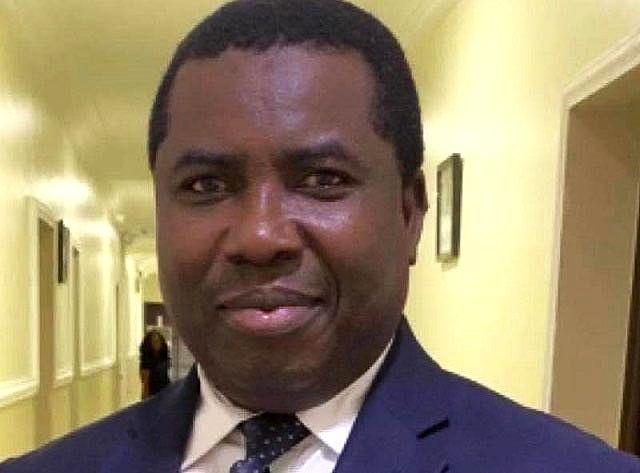

The Independent National Electoral Commission (INEC) has registered two new political parties, raising the total number of registered political parties in Nigeria to 21, as it warned that persistent internal leadership crises within parties could threaten democratic consolidation ahead of the 2027 General Election.
INEC Chairman, Professor Joash Amupitan, SAN, made this known on Thursday, February 5, 2026, in Abuja during the Commission’s first regular consultative meeting of the year with leaders of political parties. He described 2026 as a critical year marked by intensified electoral activities that would test the preparedness and commitment of all stakeholders.
Professor Amupitan disclosed that the Commission received 171 letters of intent from associations seeking registration as political parties. According to him, all applications were assessed strictly in line with Sections 222 and 223 of the 1999 Constitution (as amended), the Electoral Act, 2022, and INEC’s Regulations and Guidelines for Political Parties.
Out of the applications received, only 14 associations passed the initial prequalification stage, while eight successfully uploaded their documents on the Commission’s portal. Following final verification, he said only the Democratic Leadership Alliance (DLA) met all constitutional and statutory requirements and was registered as a political party with effect from February 5, 2026.
The INEC Chairman also confirmed that the Commission would comply with the judgment of the Federal High Court sitting in Lokoja, Kogi State, which ordered the registration of the Nigeria Democratic Congress (NDC). With the addition of the two parties, he noted that Nigeria now has 21 registered political parties, adding that certificates of registration would be issued in due course.
Professor Amupitan expressed serious concern over the growing number of leadership disputes within political parties, describing the trend as unhealthy for Nigeria’s democracy and a major distraction to INEC’s core mandate. He lamented that frequent litigations arising from internal party crises often result in the Commission being joined as a party, thereby diverting time and resources from election management.
He warned that such disputes breed uncertainty among party members, erode public confidence in the political system and undermine democratic stability. While reaffirming INEC’s neutrality, the Chairman urged political party leaders to strengthen internal democracy, embrace transparency and resolve disputes through dialogue.
On ongoing electoral activities, Professor Amupitan recalled that INEC successfully conducted the Anambra State off-cycle governorship election in November 2025, which he said was widely adjudged credible, peaceful and transparent.
He disclosed that the Commission is currently preparing for the Federal Capital Territory (FCT) Area Council elections scheduled for Saturday, February 21, 2026, with over 1.68 million registered voters expected to vote across 2,822 polling units in the six Area Councils. He added that non-sensitive materials had been delivered, training of electoral and security personnel concluded, while BVAS devices were being configured ahead of the polls.
He further announced that bye-elections would be conducted the same day in Rivers State for the Ahoada East II and Khana II State Constituencies, and in Kano State for the Kano Municipal and Ungogo State Constituencies, following vacancies caused by resignation and death of lawmakers.
Looking ahead, the INEC Chairman confirmed that the Ekiti State governorship election would hold on June 20, 2026, while the Osun State governorship election is scheduled for August 8, 2026. He noted that activities outlined in the election timetables were progressing as planned.
On the 2027 General Election, Professor Amupitan said INEC had finalised its Timetable and Schedule of Activities in compliance with the Constitution and the Electoral Act, 2022, but was awaiting the conclusion of ongoing amendments to the Electoral Act by the National Assembly. He urged stakeholders to encourage lawmakers to expedite the process to ensure a stable legal framework ahead of the polls.
The Chairman also announced that INEC would soon embark on a nationwide voter revalidation exercise, noting that despite regular updates since 2011, the voters’ register still contains anomalies such as duplicate registrations, inclusion of deceased persons and inaccurate records.
He described a credible voters’ register as the foundation of free and fair elections and stressed the need to sanitise the register to strengthen public confidence in the electoral process.
Professor Amupitan further lamented the steady decline in voter turnout over the years, citing a drop from 53.7 per cent in the 2011 presidential election to 26.7 per cent in 2023. While acknowledging that technology such as BVAS has eliminated ballot stuffing and ghost voting, he stressed that voter apathy cannot be solved by technology alone.
He called on political parties to intensify voter education and mobilisation, describing the task of rebuilding public trust in the electoral process as a shared responsibility.
On the Continuous Voter Registration (CVR) exercise, the INEC Chairman revealed that 2,782,587 eligible voters were registered during the first phase held between August and December 2025, while the second phase, which commenced in January 2026, will run until April 2026. He warned that multiple registration is illegal and assured that INEC’s technology would detect and eliminate offenders.
In his response, the National Chairman of the Inter-Party Advisory Council (IPAC), Dr. Yusuf Mamman Dantalle, congratulated Professor Amupitan on his appointment and described the consultative meeting as timely, given the volume of electoral activities ahead of 2027.
Dr. Dantalle urged INEC to continue to act independently and neutrally while ensuring a level playing field for all parties. He acknowledged the prevalence of leadership disputes within political parties and advised the Commission to be guided strictly by party constitutions when recognising and publishing party leadership, noting that such recognition confers legitimacy.
He also encouraged political parties to utilise IPAC’s internal alternative dispute resolution mechanisms rather than resorting prematurely to litigation, and called on the National Assembly to fast-track the harmonisation of the electoral legal framework as the 2027 General Election approaches.

