



The Federal Government has suspended the issuance of implementation guidelines for Nigeria’s newly enacted tax laws due to uncertainty over the final, authentic versions of the Acts, Chairman of the Presidential Tax Reform Committee, Taiwo Oyedele, has disclosed.
Oyedele made the revelation in Lagos on Wednesday, 14th January,2026, while responding to questions after delivering the keynote address at the 2026 Economic Outlook organised by the Institute of Chartered Accountants of Nigeria (ICAN), themed “ICAN@60: Accountability as the Bedrock for National Development.”
He said the Nigeria Revenue Service (NRS) and the Joint Revenue Board (JRB) had been instructed to pause all guideline preparations because authorities could not confirm which version of the tax laws represents the final and legally binding text.
“We are not 100 per cent certain that this is the final official position. So I told everyone, NRS, JRB to wait, because we cannot issue guidelines in that situation,” Oyedele said.
According to him, concerns arose over conflicting versions of the tax laws in circulation, prompting his team to attempt to obtain printed copies from the government printer, as prescribed by the Acts Authentication Act.
“The Act says whatever the government printer publishes is evidence of the law that was passed. The printer published something, which we considered official. Lawmakers said that was not what they passed,” he explained.
Oyedele said his staff later discovered that the National Assembly had taken custody of all printed copies of the tax laws and directed that they should not be sold or made available to the public until lawmakers complete their review.
“While that is good in the interest of due process, it has also reintroduced uncertainty into the tax reform process,” he noted.
Efforts to obtain reactions from the spokespersons of the Senate and the House of Representatives were unsuccessful as of press time.
The controversy surrounds four major tax legislations — the National Revenue Service (Establishment) Act, the Joint Revenue Board of Nigeria (Establishment) Act, the Nigeria Tax Administration Act, and the Nigeria Tax Act which took effect on January 1, 2026.
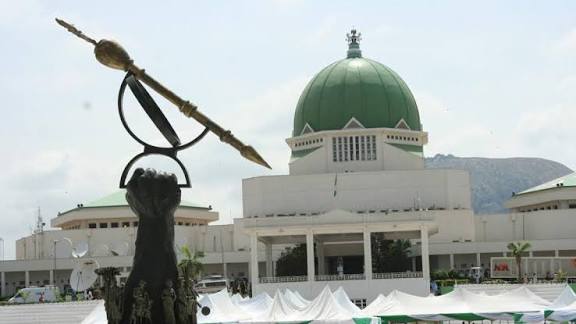
In December, a member of the House of Representatives, Abdussamad Dasuki (PDP, Sokoto), raised a matter of privilege alleging discrepancies between the versions of the tax laws passed by the National Assembly and those gazetted and released to the public. A seven-member committee was subsequently set up to investigate the claims.
On January 3, the National Assembly released Certified True Copies (CTCs) of the laws it said reflected the versions duly passed by both chambers, disowning the earlier gazetted copies that had generated public concern.
Despite the controversy, Oyedele downplayed the impact of the disputed changes, insisting they do not alter the substance of the reforms.
“There are few items that shouldn’t affect the main things people care about, nothing about tax rates, tax burden, or filing deadlines,” he said.
Oyedele also warned against misinformation surrounding the reforms, claiming it had already inflicted significant economic damage.
He disclosed that false narratives about the tax laws contributed to a N4.6 trillion loss in the Nigerian stock market in a single day in November 2025.
“The danger of misinformation is real. Fake news not supported by data led to real losses, including for people whose pensions are managed by PFAs,” he said, adding that some groups were allegedly paid to protest against the reforms.
At a panel session during the event, stakeholders called for stronger inter-agency collaboration to ensure effective implementation of the tax laws.
Director-General of the Lagos Chamber of Commerce and Industry, Dr Chinyere Almona, urged government agencies to engage more closely and deploy technology through a centralised monitoring system to avoid policy conflicts.
Similarly, Director-General of the Manufacturers Association of Nigeria, Segun Ajayi-Kadir, stressed the need for inclusive tax implementation that supports growth without undermining competitiveness, noting that unsold inventory in the manufacturing sector has risen to about N2 trillion.
Earlier in his welcome address, ICAN President, Mallam Haruna Nma Yahaya, described accountability as an “economic imperative,” warning that weak institutions and poor enforcement could derail Nigeria’s fragile recovery.
While acknowledging signs of stabilisation in 2025, including GDP growth above 4 per cent, easing inflation, and improved foreign exchange reserves, Yahaya cautioned that progress remains vulnerable without transparency, discipline, and strong institutions.
“How these reforms are executed will test the durability and efficacy of our institutions,” he said, urging professionals and policymakers to focus on practical solutions that translate reforms into tangible national outcomes.