

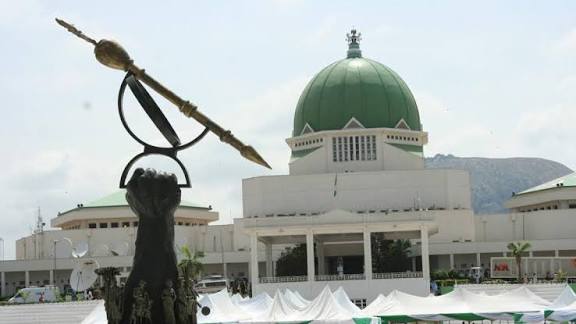

The House of Representatives Public Accounts Committee (PAC) has recommended the exclusion of budgetary allocations for 2026 to 22 federal Ministries, Departments and Agencies (MDAs), including the Nigerian Meteorological Agency (NiMet), Federal Housing Authority (FHA), Standard Organisation of Nigeria (SON), National Insurance Commission (NAICOM), and the National Business and Technical Examinations Board (NABTEB), over alleged persistent accountability breaches.
The decision was announced on Thursday, 12th February,2026 during a public hearing chaired by Representative Bamidele Salam, following what the Committee described as repeated failure by the affected agencies to respond to audit queries and honour legislative invitations.
According to the Committee, the agencies failed to address issues raised in the Auditor-General for the Federation’s Annual Reports for 2020, 2021 and 2022, despite several summons and directives to submit relevant financial records.
The agencies affected in addition to NiMet, FHA, SON, NAICOM and NABTEB are: Corporate Affairs Commission (CAC), Federal Ministry of Housing & Urban Development, Federal Ministry of Women Affairs and Social Development, Federal University of Gashua, Federal Polytechnic, Ede, Federal Polytechnic, Offa, Federal Medical Centres in Owerri, Makurdi, Bida, Birnin Kebbi and Katsina, Federal Government College, Kwali, Federal Government Boys’ College, Garki, Abuja, Federal Government College, Rubochi, Federal College of Land Resources Technology, Owerri, Council for the Regulation of Freight Forwarding in Nigeria and FCT Secondary Education Board.
The PAC accused the affected institutions of failure to submit critical financial documents, ignored invitations to appear before the Committee, and did not respond to audit observations bordering on non-compliance with Financial Regulations, due process violations, and weaknesses in internal control systems.
It further disclosed that several of the agencies have not submitted audited financial statements for periods ranging from three to five years or more, in contravention of statutory requirements.
Speaking during the hearing, Committee Chairman, Rep. Bamidele Salam, said the National Assembly should not continue to appropriate public funds to agencies that disregard accountability mechanisms.
“Public funds are held in trust for the Nigerian people. Any agency that fails to account for previous allocations, refuses to submit audited accounts, or ignores legislative summons cannot, in good conscience, expect fresh budgetary provisions. Accountability is not optional; it is a constitutional obligation,” Salam stated.
He stressed that the recommendation is not intended as punishment but as a corrective measure aimed at restoring fiscal discipline and strengthening transparency in public institutions.
The recommendation is expected to be considered by the House of Representatives as part of deliberations on the 2026 Appropriation Bill. If adopted, the affected agencies could face suspension of funding until they comply with audit and oversight requirements.
The Committee maintained that its action is consistent with the Financial Regulations 2009 and the constitutional oversight powers of the National Assembly, signaling what could become one of the strongest legislative accountability measures in recent years.